Sunday, November 18, 2018

5 Handicrafts from Used Items Can Be Sold Expensive

Used goods are often underestimated. Even often discarded and sold at very cheap prices. But in the hands of creative people, used goods can be transformed into high-value goods and can be sold at high prices. Well, if not for a long time, here are some collections of handicrafts made from various used items.
  
1. CD bird shape.

 Look at how beautiful the craft is. Did you know that these beautiful and beautiful birds are strung together from CD discs that are no longer used. Yes, starting from items that have not been used can be transformed into items of high artistic value.

2. Guitar motifs from used CDs.
Wow, you can see for yourself. Not only in the form of animals, the results of used CD pieces can also be used to make beautiful guitars. Look at the classic motifs that are arranged one by one from the fragments of the cd. So as to make the value of art that is of high value on the guitar.

3. Wall decor from CD
Imagine the walls of your house have decorations like this. Looks really beautiful right? Now make wall decorations from this CD you can consider. How to make it easy anyway. You just have to give black color to the plate then painting with batik motifs or your favorite motif.

4. Place jewelry from used bottles.
  Many look down on used bottles. Its existence is considered as garbage that must be kept away from home. But, in the hands of a used bottle creative person can be transformed into a place of jewelry that looks luxurious and unique. You can put jewelry that you use everyday in this place.

5. Draw flowers with bottles.
Here for those who like to paint. You only need to wet the bottom of the bottle with paint then attach the bottom of the bottle to the painting paper. How easy is that? 
 

Thursday, March 5, 2015

Abaca Fiber Banana Producers


The abaca fiber crops of leaf sheath, including the family Musaceae or banana types. It grows wild on the island of Mindanao (Philippines) and Sangihe Island (Indonesia), abaca therefore also known as Manila Hemp Banana. Fiber is strong and resistant to water, it is good for the industry abaca fiber rigging of ships and others. Abaca fiber is also the raw material of high-quality paper pulp such as paper money, paper documents, paper checks, plaster paper, tea bags, mimeograph paper, and for textiles.


In Indonesia, abaca production centers located in South Sumatra, Java, and Borneo Sangihe Islands. Indonesia still has one of the manufacturer and exporter of abaca fiber and only abaca plantation development. With the increasing demand for abaca fiber from developed countries such as Germany, Holland, France, Japan, Spain, Denmark, America, Britain, and Canada, indicate an opportunity for Indonesia to increase acreage and production of abaca as non-oil commodities.
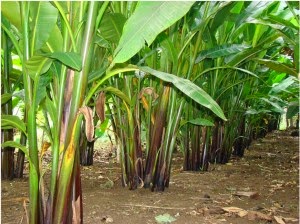
Figure abaca, together with the usual banana. What distinguishes it is, abaca slimmer. Can be up to six meters high. Characteristic of abaca is the stem, and brown midrib. Variegated its leaves green with brown, similar to the uniform Army Corps Special Forces. Abaca also does not produce bananas, because the fruit never grow perfectly. As with other banana, abaca grow
group with one parent and some plant saplings. Tillers were used as seed in the cultivation of abaca.
Abaca planted tightly spaced, so that growth is rising. With growing upward, will be obtained rod long enough, until the resulting fibers are also long. Age abaca from planting to harvest between 18 sd. 24 months (1.5 - 2 months). Harvest can be done continuously hose 3 to 8 months, for about 20 years. Abaca harvested by cutting the stems. On the banana fruit, harvesting is done in the middle of the trunk. In harvest abaca, logging done on the base of the stem.
Abaca fiber is taken mainly from the shaft. Banana trees, is actually a pseudo-stem, which consists of the fused sheet leaf midrib. Original banana stem weevil which are in the form of land. Sheets of leaf sheath was then be processed to take the fiber. In one diameter abaca stem 30-40 cm, can be obtained between 12 sd. 25 sheets of leaf midrib. In addition consists of cellulose fibers, abaca sheath also contains lignin, and pectin. After lignin and pectin, removed, abaca fiber is referred to as manila hemp or manila.
Excess manila hemp is durable, flexible, and resistant salinity. That is why popular abaca fiber as rope ship, as well as fishing nets. Nylon is more resistant to sea water, but the disadvantages are heat resistant, and easily tangled. In addition to the ropes, manila hemp also
popular as a paper (manila papers), including for the manila envelope, as well as fabric. Manila hemp fibers can be spun single, can be mixed with cotton, flax, hemp, rayon, and polyester. Manila hemp fabric material is also very strong, although the quality is not as good as hemp.
Abaca has the advantage of being relatively simple cultivation, compared with hemp, jute, kenaf, and cannabis. The cultivation of hemp to be able to more than 10 years, only suitable at elevations above 500 m. asl. Jute, kenaf, and cannabis is an annual plant, which once planted should be dismantled. Abaca suitable to be cultivated from the lowlands, up to an altitude of 1500 m. asl. in the wet area. Once planted, abaca can be continuously harvested for 20 years. Abaca will also absorb labor, both for the cultivation and process.
Growing ConditionsRequirements grow, which according to the abaca plant is climate type A classification according to Schmid and Ferguson, with rainfall of 2000 - 3000 mm / year and the number of rainy days between 150-200 days. Abaca can grow well in the lowlands to the highlands which reaches an altitude of 1000 m above sea level, with good soil that is loose soil such as clay clayey or sandy loam and do not there is a dense layer.
Seeds used for planting is derived from the parent plant saplings aged 2 to 2.5 years, a spacing of 5 x 3 meters with a population of about 660 plants per hectare, the planting hole is made with a length x width x in is (25-30 cm) x (25-30 cm) x (25-30 cm). Maintenance performed on young plants by tilling the soil and weeding, it
periodic disposal leaves have dried up, fertilization is done once a year at the start of the rainy season with the type and dose of fertilizer applied, namely: 1 kg ZA + 1 Kg dolomite per clumps are given in the groove between the rows of plants.
Rejuvenation is done when the plants were aged between 15-20 years also depends on the condition of the plant, how to disassemble the entire plant and not to the remaining stump or seedling-puppies left, then planting the new crop.
Plants begin to be harvested after the age of 2-3 years with the criteria already be felled tree that is when it is out of interest (heart) or near the time the plant will start flowering, heart visible tip of the stem, harvesting lowland faster than the time of harvest in the highlands , how to harvest by cutting the stem at the top of the banana weevil, cuts do not horizontally to prevent accumulation of rain water that causes decay. Abaca productivity per hectare can reach 3 tons of dry fiber every six months.
Cut stems cut along the 110 cm or customized with fiber machine (dekortikator), cut logs and then exfoliated into sheets midrib. Leaf sheaths dekortikator and transported to the engine resulting wet fiber, then squeezed and dried.

Wednesday, March 4, 2015

Creating a Beautiful Arts, Crafts of Cans Used

Handicraft or crafts can be done from cheap materials that yng of waste food cans, beverage cans and other metals. Creations without limits can be done for a hobby, school children to be more creative or someone who rely on this craft as a livelihood. Here are some examples that can be an inspiration to you, good luck.


Sunday, February 22, 2015

Second Hand Crafts, Creative Arts, Used Plastic Bottles

Crafts of Used Goods, Used Plastic Bottles Creative Arts. Here are a variety of ideas to take advantage of old bottles that are found everywhere to be made into a variety of creative crafts from the main material used plastic bottles.
Crafts of Used GoodsThere are various types of bottles are the most commonly used that we find in everyday life. Some are made of glass, ceramic, aluminum, plastic, and so forth. Well one of the types of bottles which are also the most commonly found and used bottles made from plastic base material.Plastic bottles are widely used as containers for various drinks. Unfortunately it is not uncommon beverage bottles or other scrap thrown away. While these plastic bottles as we know it could not easily broken down by soil, thereby increasing environmental pollution. Well this time we can help reduce environmental pollution by using plastic bottles to make a variety of crafts from recycled materials.


Wednesday, January 22, 2014

Bamboo Charcoal

Bamboo charcoal is processed by a system known as the burning pyrolisis which aims to eliminate the water content, as well as making bamboo carbon material. The process of making bamboo charcoal can be done as the manufacture of wood charcoal. It's just to get a good quality bamboo charcoal, burning time and temperature must be set such that, if it is too hot or the less heat it will produce low-quality charcoal. If produced correctly, bamboo charcoal can rival the quality of charcoal from mangrove wood is widely used today.

Charcoal product itself can be used for many things, ranging from health products (activated carbon), water filter, up to fuel. Charcoal from bamboo material has an advantage because it has exceptional micro structure, with many shafts. Make it more effective as a neutralizer and water into fuel is much more effective than wood. Even when activated, bamboo charcoal will be more effective and better for burning.

In addition to the final product in the form of charcoal or activated carbon, bamboo charcoal-making process can also produce by-products of high economic value, such as bamboo vinegar. Bamboo vinegar is very popular because of the distinctive aroma. More broadly, bamboo vinegar can be processed again into cosmetic ingredients, insecticides, deodorants and agriculture. Bamboo vinegar has more than 400 different compounds that can eliminate odors, kill bacteria, and maintain healthy skin.

Wednesday, January 15, 2014

Furniture Bamboo

Bamboo furniture is not new in this country. Since the first bamboo has been used as a chair or lincak on the island of Java, starting from the most simple to the more innovative and unique in design with. In addition to the island of Java, the use of bamboo as furniture materials can also be found in North and South Sulawesi, also in Sumatra.

Today there are many types of furniture made ​​from bamboo materials, ranging from bamboo to a round shape still, until the bamboo boards made ​​or formed by pressing technology that can be curved and patterned according to the needs. Among the bamboo furniture products can be: a set of chairs and table, large sofa, chair and patio table, tv rack, bookshelf, wardrobe, bed frames, chairs / recliner and much more. All kinds of furniture products that can be made with wood, also can be made ​​with bamboo.

Wednesday, January 1, 2014

Bamboo Water Fountain

Bamboo is generally used for the purpose of building a home and to make furniture such as desks, chairs, and a number of other crafts that have a fairly high economic value.

High economic value, when it became a product that is trying to be used Suranto (43 years), residents from the village of Ivory Harjo, District Sanden, Bantul, Yogyakarta, with handicrafts bamboo fountain.

Efforts initiated since early 2013, it turned out to get a positive response from the market sales despite initially only be done through a number of sites that serve online advertising sales.

According Suranto, at first he only made ​​five examples fountain bamboo handicrafts are sold at a price of Rp 200,000 for bamboo fountain measures 40 centimeters by 30 centimeters and Rp400,000 for bamboo fountain with a size of 41 centimeters times 45 centimeters.

"I advertise only in less than one week, has sold all. Buyer actually comes from outside Yogyakarta such as Jakarta and Surabaya. Fact, there are from outside Java," said Suranto to Vivanews, Friday, November 29, 2013

Attracted a considerable market share of bamboo craft muncur water that is suitable for decoration in the house, make it start to multiply production by involving three workers from their neighbors.

"As time goes on, in a week we are able to serve requests fountain bamboo craft up to 10 pieces with a variety of sizes with prices between Rp200,000 to Rp400,000," he explained.

To create a fountain bamboo craft, it takes a few staples in addition to bamboo type cendani imported from Wonosono, Central Java, which is a small pit of pottery, small water pump as used for aquarium, plastic leaves, white pebbles derived from East Java.

"Price cendani bamboo rod with a length of two meters Rp5,000, white gravel kilogram Rp3,000, leaves of plastic material strand Rp500,000 and the small water pump for around 50,000. All the material is very easy to get, "he explained.

Suranto states for orders from outside Yogyakarta, usually transmitted through the package and the packaging has been using a wooden box that the goods are not damaged to the destination address.

"For the buyer who buy in large quantities, there is a special price for the goods to be resold. Difference is almost Rp40,000 for any items purchased in large quantities rather than just buy one item," he said.

Suranto claimed not only the order of the country, he also had to make a bamboo fountain is to be sent to the United States, but through trading in the island of Bali.

"At that time, there are about 30 pieces order the bamboo fountain which will be sent to the United States through Bali," said Suranto.

Furthermore, the behavior Suranto said the bamboo fountain in the market, is also expected that more and more workers can be accommodated as many youth in his village who is now unemployed.

"Every day, workers get paid Rp 35,000, plus food and drink are prepared at home production," he said.

Wednesday, July 10, 2013

How to Make Shell Charcoal / Coconut shell

    Next time I want to give a tutorial on how to make coconut shell charcoal, because many colleagues who want to do business this, Here I only share the steps how to make it:

1. Prepare a used oil drum, try that from Pertamina because thicker and durable than others, may also use the furnace. if use drum can be moved around, so loohh mobile. and open / closed top Bredel. so you can easily insert their raw materials.


2. Can drum in the holes sides 5cm diameter. but siapin also cover the vent. no indications of any holes no problem. I chose not to in the holes, because the experience a little wasteful of raw materials, too much oxygen in the drum causing coconut quickly burned to ashes.


3. After the kiln at the ready, make STARTER for burning shell, how to enter ato waste plastic at the base drum, then burn until the fire and enter a half-sack enlarged coconut evenly, doing gradual addition of coconut shells, about 30 minutes-1 hour once. not to put out the fire, which came out just thick smoke, while in the rocking drum uneven firing order.


4. Once it gets full in the afternoon, prepare a wet burlap sack, drum cover plate, straps made of tires in the former, cover all sides really tight. not to get even the slightest air gap of cigarettes. at this stage that in the call OFF empty. coconut shell charcoal so no flushing water.


5. Open the drum on the next day, prepare a base of zinc to air ripe charcoal, charcoal cooked sorting, separating them with immature. make sure there are no hot charcoal / smoke, make sure there are no glowing embers. then in use wire sieve nets (which is frequently used by workers gravel filter), this sieve to separate from garbage and coconut coir dust. so as to produce good quality charcoal.

6. Packing charcoal already in the sifter, make sure there are no back charcoals. after the insert in the sack check back with sides touching sack sack warm when found, immediately separate and unloading the sacks. inside is ensured that there is a warm sack charcoals. so be careful.
 

7. The latter set up a fire extinguisher and telephone Tackling officer, hahahaha.

All techniques should be tried, all the problems in the field can definitely be solved. Comparison of normal and standard is 100kg Coconut shell charcoal produces 25kg. When colleagues produce charcoal under 25kg ... evaluate ranging from raw materials that are less dry or less pembakaramn good way. Perfect authoring can get charcoal 40kg / 100kg coconut shells. Yach good luck, hopefully this article can provide additional knowledge for all colleagues. I do not ask anything, just pray for me so that I EXTRAORDINARY SUCCESS.
SUCCESS ALWAYS!!!

Monday, August 27, 2012

Reap dollars FROM COCONUT SHELL CRAFT

From a hobby eventually bring fortune, maybe that's the right phrase to describe perseverance Rofik Ahmad, a young man who successfully utilize waste coconut shells, a variety of unique handicrafts of high economic value.

How not, started his hobby that likes to make a variety of miniature toys, young people Beji village, District Jenu, Tuban, East Java, which initially worked as a handyman screen printing, are now successfully being artisans Unique miniature variety, made from coconut shells. including his creation of miniature bicycles, tricycles, vintage cars, to Bross, ashtrays, various lamps, and piggy banks.

Starting with a capital of fifteen thousand dollars, he bought a sack of coconut shells on the market, Ahmad Rofik started his business in the year two thousand and six ago.
efforts are now slowly coming to fruition, despite the work it occupies only a blank page in the back of his house. after sawing and forming motif that will be a model craft, coconut shell crafts materials semi-finished, and then given a coat of varnish, so durable and shiny.

Once installed certain ornaments, then so be barbahan raw coconut shell craft a variety of craft that looks very unique, like a bicycle, tricycle, vintage cars, lanterns and various other household crafts.

His creation turned out to be pretty good quality. had even won the first contest miniature district some time ago. In fact, the creativity, not only in the interest of Tuban local market, but also began to explore other regions like Lamongan to Banyuwangi.

Ahmad Rofik fix prices ranging from up to Fifteen Thousand One Hundred Fifty Thousand Euro per piece, depending on model, size and difficulty.

With a price range, Ahmad Rofik turnover reached an average of two million dollars to five million dollars per month.

In conducting its business, Ahmad Rofik in aid two siblings, where the average per day were able to make three to ten units of miniatures.

Ahmad craft business Rofik also still have to use simple equipment and manuals, so the making of this craft slow. Ahmad Rofik wish there was concern the government, to help develop this business.

SWEET LEAF BAGS PANDAN Best Seller UP TO OVERSEAS

In the face of fierce competition between the various arts of handicraft products made from natural raw materials, artisans demanded jelly read consumer tastes and market opportunities that exist.

One craft bag made from pandan leaves natural ingredients combined with embroidery, in Sunan Giri Road Town Lamongan East Java. Evidently, this time to capture a market once favored by many domestic and foreign consumers.

Production of pandan leaf bags have fairly specialized skills. From the beginning of weaving pandanus leaves, forming a bag with sewing process, until the installation of bag knacks knacks.

Crafts bags woven from pandanus leaves have a high attractiveness for domestic and foreign consumers. This is evidenced by kerajinanyang demand continues to increase, despite the current global financial crisis.

Bags woven from pandanus leaves for quite favorite in the eyes of foreign consumers. Apart form the bag interesting and beautiful, suitable time anywhere, good shopping, work, college and more.

Mahmudah, home industry manager admitted, since the beginning of the production of unique handbags pandan leaf has been great interest in different areas, such as Yogyakarta, Surabaya and Jakarta, including taking orders from Italy and France.

Not only that, on the day which was attended cooperative president a few days ago he got pandan leaf bags orders of 2,000 pics. Production has also been on the message to show the Governor of East Java 5000 pics.

Although the bag is made from natural raw materials, each bag sold at variance. Between 25 to 35 Thousand per pcs. From craft bag, Mahmuda claimed to have turnover of up to tens of millions of dollars from its coffers.

"Bags pandan leaves with embroidered combination, relatively new in the eyes of consumers so, demand from overseas markets, hitherto crowded and substandard," explained Mahmudah. He added, pandan leaf embroidered bags generally contain pictures or paintings and writings bali. Bags pandan leaves natural combination of these embroidery, sold at Rp 80,000 per set content 2 pcs.

Described Mahmudah, in addition, pandan leaf bags more pliable than the nature of palm leaves woven bag for example. This condition mebuat consumers prefer pandan leaf bags.

She smelled profits made ​​from woven pandanus handicraft

Not just a flavor enhancer in foods, pandan leaves can also be the raw material craft. Once woven, pandan leaves can be created various kinds of handicrafts, such as mats, bags, and baskets. Pandanus handicraft is also bright prospects. Besides the price of raw materials cheap and readily available, the market has expanded to overseas.

Pandan leaf has long been known as a grower flavor in food products, beauty products, to health products. However, at this time, pandan leaves can also be used as a raw material for making mats, bags, and various other souvenirs. Of course, the economic value of pandanus handicraft is also high.

Availability of raw materials for this effort was not difficult. Look, pandan leaves easily cultivated so it is easy to obtain in Indonesia.

Do not believe? This experience Rianni Herlina, owner of CV work Bunda, one of the crafters pandan leaves. Since five years ago, a woman from Deli Serdang, North Sumatra was actively making and selling a variety of crafts such as mats, bags, baskets, purses, slippers, pencil and a box of tissues from woven pandanus.

By carrying out the work of Mother brand, products woven pandanus was able to penetrate the export market. Each month, Rianni able to raise turnover to $ 40 million.

For women aged 39 years, weaving skills acquired by generations of the family and the neighborhood. From the beginning, the family has skillfully weave rattan Rianni. In addition, most of the women in the village had a side job as a weaver.

Although not a pioneer craft woven pandanus, diligently moving Rianni women in the area to take advantage of pandan leaves. "I saw the potential of the market with the number of pandan leaves in our area," he said.

Pandan breed is easy. Pandan can grow in the lowlands to the highlands. However, pandan plants that grow at the edge of the beach has a thicker leaf characteristics to reduce evaporation. Well, pandan leaves is a good thick made of woven materials.

Currently, the products are being woven pandanus mats mainstay Rianni is. Rianni offers three kinds of size mats, matting which measures 1.5 meters x 2 meters at a price of Rp 125,000. Then mat measuring 2 meters x 2 meters is priced at Rp 150,000 and mat the size of 3 meters x 3.5 meters valued at Rp 350,000.

Pandanus mat was already sent to Malaysia and Singapore. Within a month, Rianni able to export 250 folded.

Not only in the two countries. Beginning in late 2011, the planned supply Rianni mat routine to Saudi Arabia. Meanwhile, for the domestic market, usually throwing Rianni products to Jakarta, Bandung and Semarang.

Because he took a deep breath in typical Malay handicrafts woven pandanus, Rianni was only using Malay motifs. Malay motifs form, among others, three doves, successive ants, ducks came home late and a handkerchief.

For Rianni, this business brings many advantages. In addition to being the livelihoods of their neighbors, they can also preserve the Malay culture.

Indeed, not only woven pandanus leaves of Deli Serdang only. Crafts made from woven pandanus seen also in Bogor. By establishing Pandan CV Sustainable, Sustainable Nurul plunged in woven pandanus handicraft business. Only, he focused on two products, namely women's bags and baskets.

Although only started trying since three years ago, Nurul has been able to reap the turnover of up to Rp 20 million per month. "From acquisition earnings, I get a net profit of Rp 12 million," he said.

He could earn large profit margins because the raw materials are very cheap pandan leaves. Nurul get pandan leaves at Rp 3,000 per kilogram.

Selling price Pandan Sustainable CV ranged from Rp 25,000 to Rp 200,000. "The most popular is a bag of women," added Nurul.

Women's handbags from the leaves of view, further Nurul, much in demand by women in big cities. Especially, those who have a concern for environmentally friendly raw materials. Nurul also gives assurance, durable products. Can last more than three years old.

Well, to get material manufacture durable bags and baskets, before woven, pandan leaves must be processed through several stages. After pandan harvested then cleaned and discarded needles. Then, pandan leaves cut to size webbing, ie from 1 centimeter (cm) to 3 cm.

The pieces are then boiled to 30 minutes. The boiling process is intended to eliminate the gum leaves. Then, pandan leaves in a cool, dry and protected from the sun. "If you hit the light, the leaves can be rolled up," said Rianni.

After settling about six hours, a new leaf was in flex and soaked in plain water for four hours. Only then dried in the sun to whitish. After that, it's ready to be colored pandanus leaves. After staining process continues drying is complete, ready plaited pandanus leaves.

For Rianni and Nurul, business making various handicrafts woven pandanus has good prospects. However, the artisans have to be creative in marketing. Besides relying on subscriptions and ordering via the virtual world, they are also actively promoting the event through craft fairs.

Monday, August 20, 2012

Banana stem crafts, Production Villages Popular Abroad

During these banana plants for most people just used the fruit and leaves. However, in the creative hands, banana plants can be used to craft high value and in great demand in international markets.
Banana plant stems it can be processed into unique products and quality crafts. Tukimin (50) proves that creativity in the process is capable of producing banana stem the rupiah's coffers and provide jobs for about 100 employees spread across several regions.

Since 1996, Tukimin actually pursue the world of woven fibers of the pandanus, water hyacinth and agel. However, new in 2008, the father who has also served as an urban village and the focus was shifted in developing handicrafts of banana. Found in his house which was in Tanggulangin, Nanggulan, Kulonprogo (5/2), initially switched to explain Tukimin banana craft because they want something different and new. "If I was still developing craft pandanus, agel, and water hyacinth I definitely will not go forward because of high product competition, so I switched to bananas that are still common for most people and abundant raw material", annotations Mr. Tukimin to bisnisUKM team.

Production of Popular Global Village By Tukimin countries, banana fiber is more subtle and soft when compared to other fiber materials. So that when processed to produce handicrafts, the results are also better quality. The production process is also not too complicated, banana dried first for 10 straight days in the sun. After that the fibers of the banana is untwisted. The results of the torsion fiber is woven to a wide range of craft products. Then do the finishing of products according to market demand.

Currently, Tukimin with CV. Indo Seagrassnya has approximately 250 kinds of handicraft products from banana bark. Assorted bags, rugs, boxes, baskets, and household furniture to be a flagship product whose production capacity is 1 container per month. The price offered per product are also varied, ranging from thousands to millions according to the type and size. Foreign markets was also welcomed pisangnnya craft products stems. Tukimin even recognize if the product is more in demand in the market mancagera than the local market. Countries in Europe, Hongkong, Japan became regular customers of products such banana.

Indo Seagrass currently have 6 relations firm that regularly supplies exporter of handicraft products stem (bark) banana out of the country. This makes Tukimin now has approximately 7 manufacturers built in Yogyakarta and Central Java to help meet the market demand is very high. "My ultimate goal could be to invite the community to work and produce with high spirit and creativity", said Mr. Tukimin of producers that he had built.

Production of Popular Global Village which states, In addition to the routine manufacture craft, the sidelines of a busy life as a headman, Mr. Tukimin also often asked to complete processing of a variety of craft training. Many of the students, SMEs are often asked the father was a trainer Tukimin processing of natural fiber materials. "I do not want to be stingy to share knowledge. Plagiarism or imitation of the design ideas are common in business. It just continues to lead me to remain creative and different, "he said.

Indo Seagrass is quite special, because it is recognized Mr. Tukimin far he is not actively marketing to run like most other businesses. All requests and orders are handled solely by Mr. Tukimin. However, although not actively marketing to run, increased demand for its products high. And now, in addition to the focus on craft production, Indo Seagrass also plans to improve the means of production facilities in order to meet the increasingly high market demands.

Stunning water hyacinth handicraft

Water hyacinth (ichhornia crassipes) is one type of floating aquatic plants. Besides being known as water hyacinth, in some areas in Indonesia, the water hyacinth has another name, such as in the area known as Kelipuk Palembang, in Lampung known Ringgak, known as the Dayak-ilung Ilung, in Manado known Tumpe.

Water hyacinth has a high growth rate that is considered a weed plant that can damage the aquatic environment. Water hyacinth spreads easily through the water to other water bodies. Lately, the development of aquatic plants, water hyacinth in the waters of rivers, lakes, brackish waters up to a very rapid pace. A glimpse of water hyacinth plants are useless. For communities around the edge of the river, water hyacinth is a plant parasite that only pollute streams and rivers can lead to clogged or overflowed because too much water hyacinth. Similarly, for the communities around the periphery of the lake is considered a lot of water hyacinth in the lake is a nuisance that hinders their activity on the lake.


This fact could make the water hyacinth plant considered a nuisance, but if we are keen to find opportunities, the water hyacinth plant is very useful to provide a business opportunity as a base for crafting (handy craft). Along with the development of science and technology, water hyacinth plant parts after drying it can be used as a raw material for making beautiful handbags, luggage, sandals, baskets (where used clothes), coasters, mats, trays and so on. In fact recently been used to support the furniture industry den furniture, rattan instead of increasing the price soar.

Until now many areas are able to develop an enchanting hyacinth handicrafts to manufacture craft items, furniture den furniture. Among others in Purbalingga, IN Yogyakarta, around the city of Solo, Cirebon, Jakarta, Surabaya and Bali. Even some craft items and models of water hyacinth with a certain quality, widely exported to Europe and the United States are increasingly infatuated with the goods produced from natural materials (back to nature).

Manufacture of handicrafts made from water hyacinth is needed is a long process. Water hyacinth must first be dried for about two weeks. After drying the water hyacinth and formed a long braid that made citizens and groups of artisans. After a long braid-shaped, water-Eceng is woven into the desired item. Ranging from flower pots, garbage cans, tissue boxes, bags, hats, kitchen equipment to furniture. To further enhance the attractiveness of the buyer, the webbing is ditambahakan lacquer paint. So, it looks more shiny and attractive.
Average of these crafts are sold in the market with prices ranging from Rp 15 thousand to 5 million. Depending on the size and level of difficulty of woven goods.

Here are the steps in the manufacture of handmade paper with water hyacinth material:

* The collection of water hyacinth
* Separation of the base of the stalk
* Drying the base of the stalk
* Revolves
* Forming / weaving finished work of art (bags, wall hangings, purses, chairs, etc.)

Bamboo Indonesia business World Market Interest

The abundant supply of bamboo in Indonesia it can be used as a new business opportunity that is promising. If during the public at large only use bamboo as a building material, bamboo can now be transformed into a variety of beautiful handicrafts with high economic value. For example, such as various household appliances ranging from cutlery, tambir, towels, place the fruit, decorative lamps, picture frames, as well as some other room decorations.

Although initially only interested in the community bamboo handicrafts in rural areas, but along with the rise of global warming issues in the world community, now many people are interested in using environmentally friendly products for their daily lives. So do not be surprised if the market demand is now growing bamboo craft soared even reach not only the big cities, but also to penetrate foreign markets.

consumer
The target market that you can aim at, among others, domestic consumers are usually dominated by the mothers who are looking for appliances and home supplies, the general public interested in the unique decoration of bamboo (such as picture frames, miniature bamboo houses, etc.), as well as hotel, restaurant or cafes that require all-bamboo furniture to beautify the appearance of his place of business.

Tuesday, August 14, 2012

Bamboo Made Lighting

Who does not know the bamboo tree. It was, everyone in the world knew him. In fact, the Japanese called the Bamboo Curtain country.
In tropical Indonesia, Tree with various types of bamboo grow all over the country. this is certainly becoming a separate property for Indonesia. especially for art lovers from different sides. Fine art, sculpture, and music.

Bamboo

Of a piece of bamboo which usually grows in the forest and the edge of the village. Creating art creations such as musical instrument angklung, various design Saung, and other hand crafts. even, which was filled bamboo stump roots in the soil can still be made one of the crafts such as mask-haired, clappers human head, the statue of a duck, and so forth.
Bamboo craft also can be combined with technological developments, such as integrating with electricity.

Decorative lights

who says the lights make it expensive?

With some creativity, something expensive can be transformed into cheap without reducing the quality and beauty. one of them with bamboo material.
Proper placement and a beautiful shape will make the rooms of your home becoming a beautiful and exotic. lights are usually in place in the living room, corner of the park and certain rooms. in addition to decorating the room, these lights can be accents complement the atmosphere of the room.

Well, if you're ready to try to decorate the lamp with the base material of bamboo?
If so, let us learn the tips of manufacture.
Method of manufacture:
prepare the following materials:
- Bamboo
- Energy saving lamps and colored as desired
- Cable
- Paint/ plitur
- Cement
- Sandpaper
- Paint poxy clear

If the material is gathered, how to make the following:
1. Dry and prepare a large bamboo.
2. Cut the bamboo with a size of 1.5 meters or as needed.
3. Clean bamboo with sandpaper or paint directly on / plitur.
4. Determine the bamboo lamp holder would.
5. Cut the bamboo, then sand the surface of the piece.
6. Make holes for the wires.
7. Cement also prepare a mold using a small bucket for lamp holder with a height of approximately 10cm or as needed.
8. Start painting all parts of a bamboo pole, stand alone, also in the next sections that have been sawed off and clearing.
9. To use a glossy poxy paint.

installed and ready light, really easy!
good luck, ......

Bamboo Craft Center Prinx Mas

Bamboo tree is identical to the raw material of the house / building. However, in the hands of creative, bamboo turned out to be 'transformed' into a variety of beautiful handicrafts which sell high appreciating. That's what's hereditary occupied by the residents of the hamlet Brajan Move Sleman. Nearly 90% of people currently engaged bamboo handicraft business with a variety of designs and sizes. Expertise (skills) they obtained in the manufacture of stained bamboo craft (ancestors) who had previously also known as bamboo craftsmen.

One of the craftsmen who since many years ago to develop the production of bamboo handicrafts in hamlet Brajan is Mr Sulisman (51). The man known also as the father of Hamlet / Hamlet To Brajan is a third generation as a bamboo craftsman after a stained and their parents. "In the beginning, they (the parents) just making the place work on the rice (the basket) alone, then in the 90s we began to develop the next generation of products, both in terms of design and technology," explains Mr. Sulis to the SME business coverage team on Tuesday ( 8/11). Touch here in the form of the coloring process technology, design, and use of modern equipment for media production.

With persistence owned all its citizens, eventually becoming known as Brajan one bamboo handicraft production centers, and even officially confirmed as the Tourism Village Bamboo Brajan. For Mr. Sulisman, known as a tourist village Brajan more or less able to raise the welfare of its citizens. "With the status of a tourist village, eventually many donors and investors who want to build a supporting infrastructure in Brajan, including construction of roads, arches, etc.," he added. Thus, the presence of a more appropriate facilities, many tourists are no longer difficult to reach locations bamboo crafts scattered throughout the Village area Brajan.

While for Prinx Mas himself, Mr. Sulisman admitted today capable of producing hundreds of types of crafts each month. These products include fruit basket, tissue holder, basket delivery, place rice, decorative lamps, dishes, etc.. "As long as we produce according to orders, so the amount is uncertain, we have produced 7000 pcs in 2 months, but the average in the range of 100-400 pcs / month," explained the father of three sons. Various handicrafts are sold at a price of Rp .300.000,00 Rp.1.500-0.00 / pcs, depending on the type and size. With that price, Prinx Mas in a month can earn a turnover of 5-10 million (40-50% profit).
Product Marketing Strategy

Product Marketing Strategy
Mas Prinx bamboo craft products currently marketed in various areas, including Semarang, Bali, Medan, Jakarta, East Java, etc.. While commodity exports have penetrated to Malaysia and Singapore. "For we have not been able to export directly, so it was through trading-trading in Jogja, so our biggest hope is that we can export their own products to various countries of this craft," he added. Therefore, at this time Mr Sulis maximum effort run by the marketing process assisted her daughter Ninit Sekar Wangi (25), whether through fairs and online.

Ninit said if the marketing process that has executable can not be maximized. "Most often through exhibitions, but it's just a media campaign, with the hope that eventually there are buyers interested in our products," explained Ninit. In addition to through exhibitions, graduate management education, State University of Yogyakarta (UNY) is also using social networking to attract potential buyers. "Actually we used to have a blog, but for some reason, the blog currently can not we get even more," he added.


In general, as a small business, Prinx Mas also sometimes faced with several obstacles that often hinder business. "Actually, just the main obstacle in the workforce, because most young people today do not want to follow in the footsteps of his parents to become craftsmen, then the design is still limited, and certainly venture capital," said Mr. Sulis. However, despite having some resistance, sir Sulisman and Ninit remain optimistic about the bamboo craft products can go international (export).

Then the village Brajan own, Mr. Sulisman as civil society hopes that the region can move forward and not behind the other regions. "For me personally, do not be a problem when the buyer purchased the product not in Prinx Mas, but the neighbors around, because our initial goal of this effort is a common property and for the welfare and empowerment," said Mr Sulis ending the interview on the afternoon these days.

Bamboo Ladder Towel Hangers So Beautiful

KOMPAS.com - For residential needs, bamboo has a lot of great potential that can be utilized. In addition to the structure can be used as a house, plant this one will never run out to be explored in the interest of the interior.

Perhaps, you often see bamboo used as insulation not massive, bamboo furniture, and other beautiful accessories. This time, the bamboo can be used as a dry towel in the bathroom, for example towel in the picture above.

Resembling a ladder of bamboo, bamboo hanger utilizes a vertically arranged to place a towel. Typically, the ladder of bamboo, there are several horizontal sections, making it perfect for hanging towels all family members.

Strap is practical, not take up space, and looks compact. For example, your bathroom is not measuring the width, you can drape a towel shaped like this, so just to save space.

Put it this towel ladder on one corner, and draped a towel the whole family. Neat impression will be created, the towel will not smell musty because of the habit of simply stacked.

At the bottom can still be used for used clothes basket, place a bucket, and so forth. In addition to a variety of benefits, bamboo towel ladder is expanding the function of aesthetics in the bathroom. And beautiful enough to attract attention, is not it?

Translucent Sleman Bamboo Export Markets

YOGYAKARTA, KOMPAS.com- Center bamboo handicraft business in the hamlet Sendari, Tirtoadi Village, District Mlati, Sleman regency, Yogyakarta has grown increasingly convincing.

Almost all employers who number more than 30 units, had to export to Spain, France, Holland, Canada and other countries. Bamboo handicraft business which originally grew as a small business is now growing medium, which can be in leading lives.

"Yes, if there are no export orders, local purchase requests were also quite a lot," said Mrs. Sugiarta, one businessman who claims a year to obtain export orders twice. Any export orders for at least one kontiner.

According to Mrs. Sugiarta, bamboo craft Sleman began to penetrate the export market since last 10 years. Orders are on average no more than one kontiner, even half kontiner was accepted.

"But the demands of high quality goods, so our work takes a long time. Moreover, we still sometimes difficult material," he said, adding the raw materials obtained from the district around, like Kulon progo and Gunung Kidul.

Similar disclosed Sri fortune which opened a showroom near Ny Sugiarta. It could be two times a year melakuikan exports.

"Right now I only served one kontiner request of France," he said.

Both Mrs. Sugiarta and Sri Rejeki admitted, domestic demand is quite a lot. "yes, we also serve retail, one unit for shipment to Jakarta so we serve," said Sri Rejeki.

Wednesday, August 8, 2012

BAMBOO CRAFT Wonogiri

BAMBOO, THE POTENTIAL IN SUPPORTING EMPOWERMENT NTFPs

Forest is not just pnghasil wood, but still a lot of potential to be developed. One of the potential that is now being promoted is a non-wood forest products (NTFPs). This potential can be sap-getahan, oil, pig, powder, environmental services and a lot of potential that can support the economy and public welfare.
Bamboo is one of NTFPs which has long been known and used by the community for various purposes, such as building materials, transportation, home appliances, handicrafts to musical instruments.


Indonesia is known to have many bamboo plants, around 124 species of bamboo grown in nature Indonesia, but is widely known and cultivated by the new community of about 20 species of bamboo, such as bamboo spikes, buggy, Ampel, rope, Betung, yellow, wulung and others. Bamboo has a lot of craft items produced in the form of woven or in other forms as disposable goods to souvenirs.


With bamboo materials in many rural communities have the skills as a craftsman, either individually or in groups, and bamboo handicrafts Indonesia has entered the export market to many countries with various forms of interest, which is the result of community skills, both traditional and the modern equipment of plant products.
Wonogiri, one of the producers of handicraft made from bamboo had groups of craftsmen built the Project Development of Watershed Management in collaboration with FAO Wiroko in 1981.
Bamboo crafts found in the District Nguntoronadi Wonogiri (4 villages) and Tirtomoyo (2 villages) in each village consists of about 20 artisans with various skills in terms of making the form of craft. Of these groups were born craft forms which attract much attention, and it is evident when following the inauguration of the exhibition in order Manggala Wanabakti Department of Forestry in 1983 which was inaugurated by President Soeharto. One form that interest Ibu Tien is a bag, which was then submitted by the committee as a souvenir, as well as mothers who attended at that time minister.
While other forms such as cups, belts attract much attention as the fathers of both disposable and decorative items or souvenirs.
The presence of bamboo craft in all its forms has attracted the attention of visitors at the various exhibitions that followed, both in Jakarta Fair arena, as well as in other cities such as Solo, Yogyakarta and surrounding areas. Been included in the National Green Summit event in Wonogiri and Kendari (Southeast Sulawesi). Since then many orders are coming from various places, both small parties and large parties, either as disposable items and souvenir items in the wedding party. And marketing of bamboo crafts adorn the Small Industries Centre in Yogyakarta and Solo as well as the Department of Industry Wonogiri.


NTFPs through the potential of bamboo would be able to support community development programs around the forest. With the bamboo craft can provide extra income for the artisans in Wonogiri, which generally has a main job as a farmer. And bamboo craft is a side job when his leisure after returning from the field or fields, but provide sufficient income to what it produces in the use of bamboo raw materials that are widely grown around the lives of the craftsmen.
Craft activities by people with the raw material bamboo is one of the solutions in support of government programs through the empowerment of communities in and around the forest in order to boost the economy and welfare. Hence the need for support from stakeholders both local governments and private parties. So that the craft of bamboo which is the potential of NTFPs can be run continuously, also the presence of bamboo can be maintained to support the artisans in the production of craft items. Because bamboo provide benefits to them, of course, also expected in the surrounding community can provide active participation in preserving the types of bamboo according to the ability of bamboo to a variety of handicrafts.
Craft objects made from bamboo can be a fan, a much-loved by women. Has a unique shape with a simple but beautiful decorations, but it can be used as wall hangings attractive living room. Lamp shade, but can also be used as a light room as a decoration, because of its unique and interesting. School bags in each exhibition attracted many visitors the most, besides the odd bag suitable for use in various places in a relaxed .. There are many other interesting forms of Wonogiri bamboo handicrafts, such as tkap lights, place a pencil, place toothbrush / toothpaste, place the comb, where tisue and so forth.


Bamboo as one of the potential of NTFPs would be able to support community empowerment program in improving the welfare and prosperity if managed properly and seriously. Bamboo crafts in Wonogiri as one of the activities that are managed by farmers' groups around the sub-basin watershed Wiroko Solo.
loading...